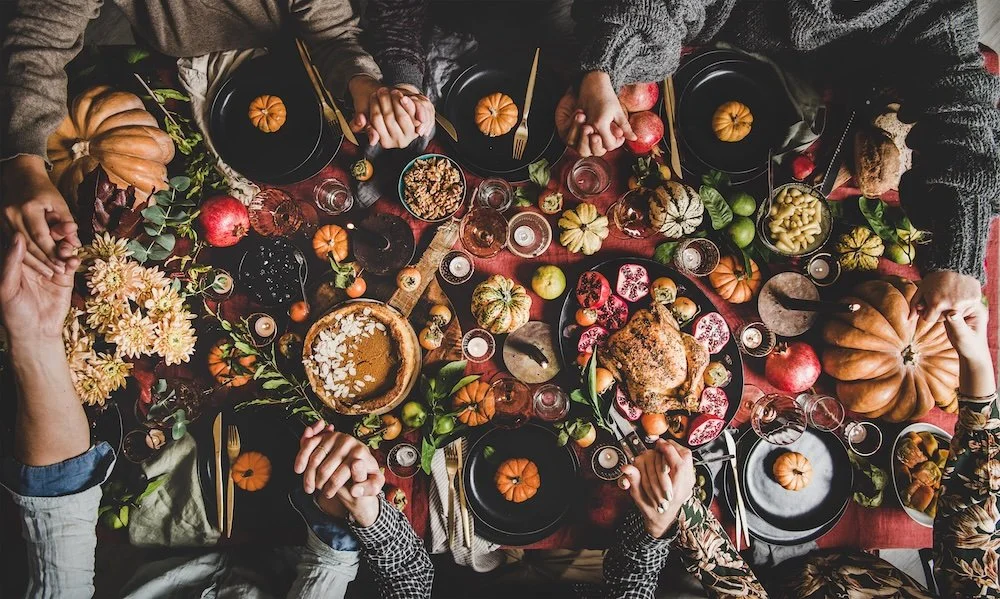
This past summer handed us an uncomfortable reminder here in the United States. As farm stands overflowed and markets filled with fresh produce, the country also saw wave after wave of foodborne illness, including a widespread outbreak tied to recalled lettuce. And now, as we move toward Thanksgiving and a holiday season full of travel, gatherings, and tables heavy with rich food, questions about what’s safe to eat feel especially close to home.
As Ayurvedic practitioners, we don’t believe the answer is fear, or swearing off vegetables, or bracing for the holidays. The answer, as it so often is in Ayurveda, is resilience: strengthening the fire within, and coming a little closer to the food that feeds us. When we understand how our own digestion protects us, and when we build a warmer, more local relationship with our food, we can meet this season from a place of steadiness rather than worry.
So let’s talk about your gut, your food, and your table, and how to keep all three strong as the world around them shifts.
🌱 The Ground Beneath Our Food Is Shifting
It’s worth naming plainly, because it shapes the choices in front of us: the systems we’ve long trusted to catch food-safety problems are under real strain right now.
Over the past two years, the federal agencies that watch over our food have seen significant staffing reductions: the FDA’s workforce down by roughly a fifth, the CDC’s by about a quarter. The national early-warning network for foodborne illness, FoodNet, was narrowed in 2025 from actively tracking eight common pathogens down to two, which means parasites like Cyclospora (the very culprit behind this summer’s lettuce recalls) are no longer actively monitored through that system. Inspections of foreign food facilities have fallen to some of their lowest levels on record, and more of the responsibility for inspection is being handed to individual states. (These shifts have been widely reported; the CDC’s cyclosporiasis surveillance page and TIME’s coverage of this year’s outbreaks are good neutral starting points.)
This isn’t cause for panic, and experts are still sorting out exactly how much it changes our day-to-day risk. But it is a plain reminder of something Ayurveda has taught all along: the most reliable place to build resilience isn’t in a distant agency; it’s in our own kitchens, our own communities, and our own bodies. The less we need to depend on a system we can’t control, the steadier we can feel.
🧺 Coming Closer to the Source
One of the most powerful (and nourishing) things we can do is simply shorten the distance between our food and ourselves.
Every hand and mile between a farm and your plate is another place where something can go wrong. When you buy closer to home, you don’t just shrink that chain; you gain something our grandparents took for granted: you can actually know where your food comes from. You can ask the grower how they farm. You can shake the hand that raised the chicken or baked the bread.
And here’s the beautiful part: this is deeply Ayurvedic. Ayurveda has always taught that food grown in your own region and season is what your body is best designed to digest. Local and seasonal eating keeps you in rhythm with nature, supports strong digestion, and happens to be more traceable and fresh. Leaning on your local food web is ancient wisdom and modern resilience at the same time.
A few gentle ways to come closer to the source:
• Let an app point the way. A tool like Localize helps you discover the farms, markets, CSAs, and local makers near you, an easy first step when you’re not sure where to begin sourcing closer to home.
• Shop your farmers market for produce, eggs, honey, and more, and build real relationships with the growers you trust.
• Join a CSA (community-supported agriculture) for a weekly share of seasonal, local produce straight from a nearby farm.
• Find your local makers (a butcher, a baker, a small dairy, a honey producer, a fermenter) and buy direct when you can.
• Grow and preserve a little yourself. Even a few herbs on a windowsill, or canning up a batch of the season’s abundance, deepens your connection to your food.
• Cook at home more often through the holidays, where you control the freshness, the handling, and the love that goes in.
This isn’t about doing everything, or doing it perfectly. It’s about weaving yourself a little more deeply into a web of people and places you can actually trust, which is good for your gut, your community, and your peace of mind.

🔥 Agni: Your Inner Shield
Of course, the oldest food-safety system of all is the one you carry inside you. In Ayurveda, nearly everything about our health circles back to Agni, our central digestive fire. Think of Agni as a metabolic furnace. When your fire burns bright, your digestive tract efficiently breaks down food, draws out its nourishment, and neutralizes unwanted micro-organisms before they can take hold. A strong, well-tended gut is simply better equipped to handle the everyday microbial challenges we all encounter.
When Agni grows sluggish or overburdened (as it easily does amid holiday richness and stress), digestion slows. Undigested residue, what Ayurveda calls Ama, begins to accumulate, creating exactly the kind of stagnant environment where opportunistic pathogens are more likely to settle in. So much of protecting ourselves comes down to one question: is my fire bright, and is my inner terrain healthy?
🐠 Your Gut Is Like a Fish Tank
Here’s a picture we come back to often with our clients. Your gut is a lot like a fish tank.
The fish that thrive depend entirely on the quality of the water. Is it fresh or salt? Clean or polluted? The right temperature, or too warm for the climate? A healthy, well-balanced tank supports a rich community of life. A neglected one goes sterile, or fills with invasive, parasitic species that were never meant to be there.
Our inner ecosystem works the same way. The trillions of microbes that keep us healthy flourish only when the terrain supports them, and that terrain is shaped by what we eat, how we live, and how brightly our Agni burns. This is also why you can take all the probiotics in the world and still not feel a difference: if the environment doesn’t support them, they simply don’t survive, just like dropping fish into water that was never right for them.
Good gut health is never about one magic supplement. It’s about tending the whole tank.
🍲 Staying Safe in Your Own Kitchen
Whether your food comes from a local farm or the grocery store, how you handle and prepare it is where a great deal of your safety actually lives, and it’s entirely in your hands. Blend a little modern food-safety practice with classic Ayurvedic kitchen wisdom, and you keep your fire bright and your food clean.
• Favor cooked over raw, especially now. Raw foods are some of the hardest things we ask our gut to process, and cooking acts as a kind of pre-digestion: softening fibers, freeing nutrients, and neutralizing many pathogens. Leafy greens are a telling example: steaming or sautéing produce until it’s genuinely hot (at least 158°F / 70°C) destroys parasites like Cyclospora while making the greens far gentler on digestion. A simple kitchen thermometer takes out the guesswork. (In Ayurvedic terms, warm cooked food also suits Vata season perfectly.)
• Rinse produce mindfully. Wash fruits and vegetables thoroughly under cool running water before cutting, rubbing the surfaces as you go, and use a clean produce brush for firm items like melons and squash. (Rinsing helps but won’t remove every parasite, another reason cooking matters.)
• Cook with digestive spices. Build meals around warming spices like fresh ginger, cumin, coriander, turmeric, black pepper, and mustard seed. They kindle Agni, aid absorption, and offer their own gentle antimicrobial benefits.
• Savor healthy fats. Sauté in a little ghee, sesame oil, or olive oil; warm, healthy oils nourish the intestinal lining and soothe Vata’s dryness. We love a grass-fed A2 ghee for this.
• Skip the ice-cold drinks. Iced beverages pour water on your digestive fire. Sip warm water instead, or a gentle CCF tea (equal parts cumin, coriander, and fennel), a time-honored ally for digestion.
• Mind the basics, especially for a holiday houseful. Wash hands well, keep raw and cooked foods separate, cook poultry through, refrigerate leftovers promptly, and reheat thoroughly. Simple, but it carries you far when you’re cooking for a crowd.
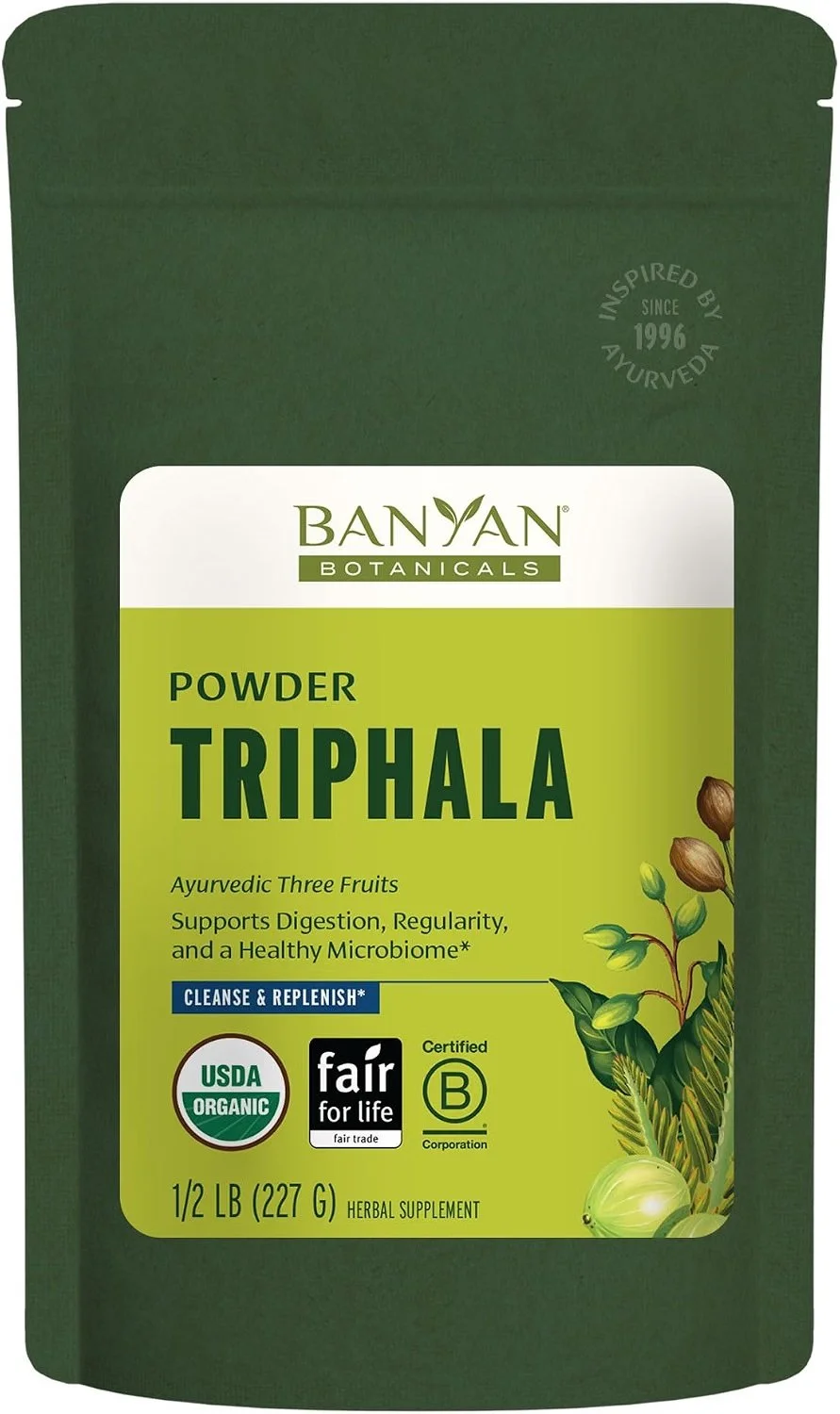
A few daily habits keep the fire even steadier: eat at regular times, don’t overfill the stomach, sit down and actually taste your food, and start the morning by scraping the tongue with a copper tongue scraper to clear overnight Ama. Gentle support like Triphala can keep digestion and elimination moving smoothly through the heavier eating season.
🌿 Tending the Terrain: Fermented Foods & Probiotics
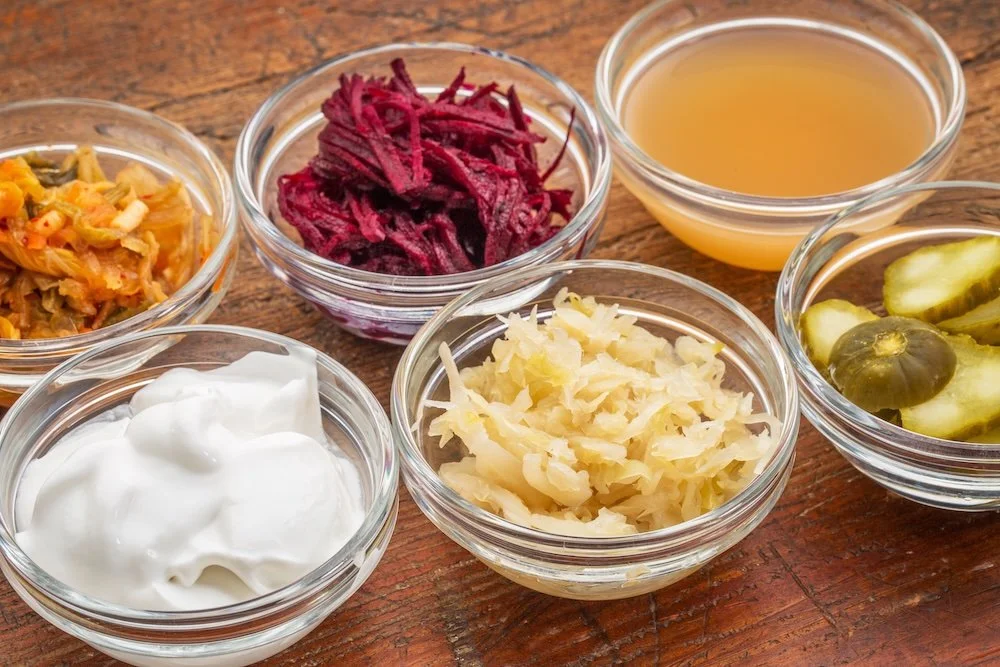
Once your fire is bright and your food is prepared with care, you can turn to populating that healthy tank. Ayurveda has long encouraged small amounts of fermented foods (traditionally a little fresh, homemade yogurt each day) to introduce beneficial cultures. (Here’s another lovely place to go local: a nearby fermenter’s kraut, kimchi, or yogurt connects your gut and your community in one jar.)
A good-quality probiotic helps too. When choosing one, a few things separate a supplement that helps from one that mostly passes through:
• High CFUs (colony-forming units): preferably in the billions.
• Multi-species: a variety of strains, because a diverse ecosystem is a resilient one.
• Typically refrigerated: a sign the cultures are kept alive and viable.
A favorite in our world is Klaire Labs / SFI Research, and we like to alternate between their blends to keep the terrain diverse. But remember the fish tank: a probiotic only works if the environment welcomes it. Tend the water first (bright Agni, warm cooked food, less Ama) and the good populations can truly take hold.
💛 If You Do Get Sick: Gentle Aftercare & Rebuilding
Even with the best care, sometimes something gets through. If you’ve just come through a bout of foodborne illness, first: be gentle with yourself. The goal now isn’t to “detox” or push; it’s to rebuild the fire slowly and repopulate the tank.
• Rest and rehydrate. Sip warm water, ginger tea, or a simple bone or vegetable broth that rehydrates and nourishes without taxing digestion.
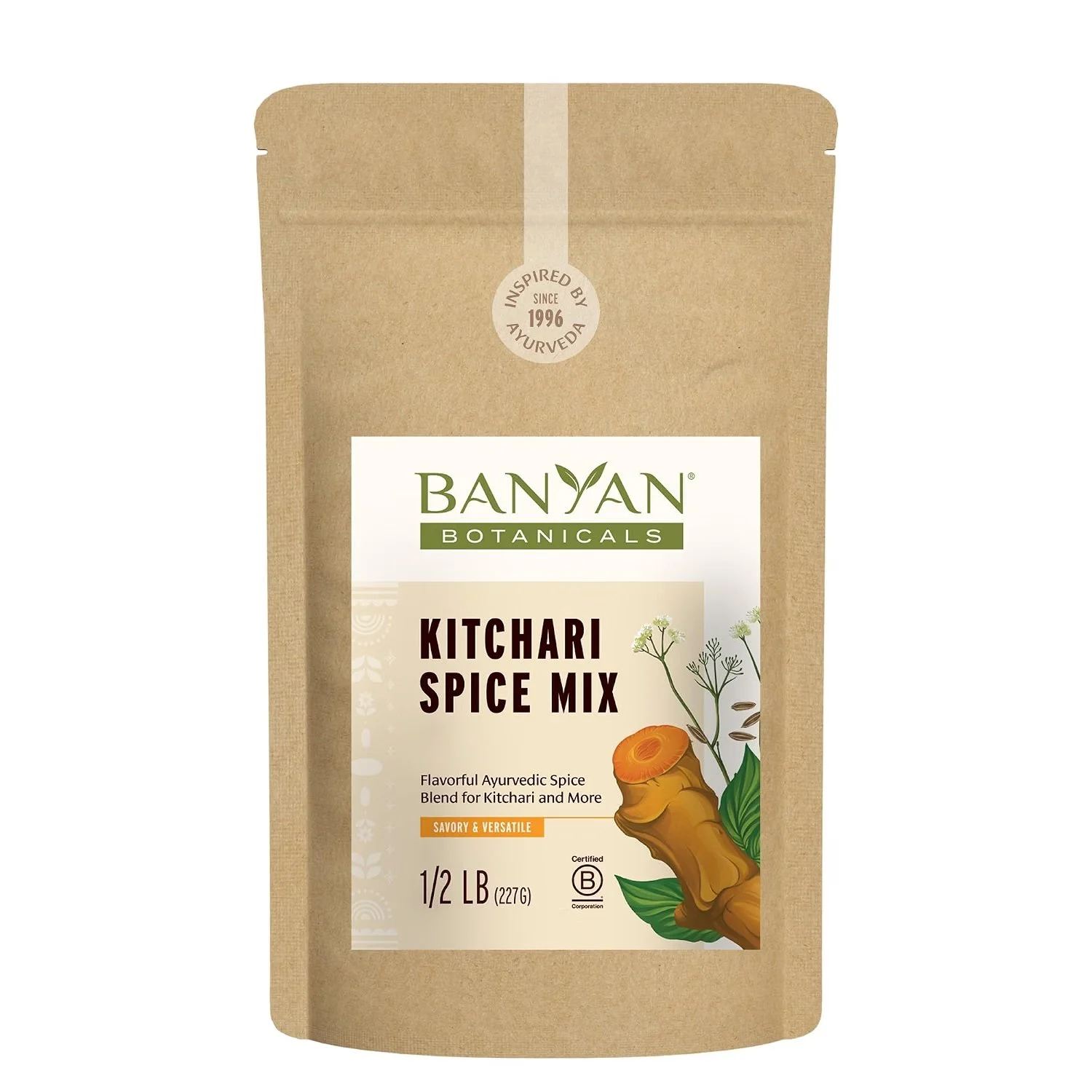
• Eat simple, warm, and easy. This is the moment for kitchari, the classic Ayurvedic mono-meal of split mung beans and rice, spiced gently and cooked soft. A kitchari spice mix makes it effortless. Stewed apples, soft cooked vegetables, and rice porridge are all kind to a recovering gut. Reintroduce heavier or raw foods slowly as your appetite returns.
• Rekindle Agni gently. A thin slice of fresh ginger with a squeeze of lime before meals helps wake the appetite. Keep the warming spices coming.
• Repopulate, especially after antibiotics. If recovery involved a course of antibiotics, picture it this way: antibiotics can clear the entire tank. Sometimes that’s necessary, even life-saving, but it means very little is left living afterward, the helpful and harmful alike. That’s exactly when thoughtful repopulating matters most. Return to fermented foods and a quality multi-species probiotic to rebuild a diverse, healthy community.
• Let a calm nervous system help. Rest, gentle movement, and lowering stress all support the gut as it heals, and it’s a beautiful time, too, for calming bodywork.
A gentle but important note: foodborne illnesses range from mild to serious, and some (including Cyclospora) may need specific medical treatment to fully clear. If symptoms are severe, persistent, or include signs of dehydration, please don’t tough it out at home; reach out to your doctor. Ayurvedic aftercare and good medical care are partners, not rivals; and with federal oversight stretched thin, reporting a suspected foodborne illness to your local health department is one more way we look out for each other.
🌺 A Gentle Closing
There’s real peace in remembering that your body is not defenseless, and neither is your community. Long before recalls and headlines, we were designed with a fire meant to protect us, and that fire responds, faithfully, to how we tend it. Cook with care. Spice your food. Warm your belly. Shake the hand that grows your dinner. Populate your inner garden and let it grow strong.
This week especially, as we gather around the table to give thanks, there’s something quietly powerful in knowing where our food comes from, and in offering a little gratitude to the hands that grew it. The world may feel uncertain, but the table can still be a place of steadiness, nourishment, and trust. May your fire burn bright, your terrain stay vibrant, and your holidays be both nourishing and safe.
May you be well-fed, well-rooted, and deeply resilient.
🌿 Your Gut-Health & Food-Resilience Essentials Recap
• Localize app: find the farms, markets, and makers near you
• Local food web: farmers market, CSA, local makers; shorten the distance from farm to plate
• Kitchen thermometer + produce brush: cook thoroughly, wash firm produce well
• Digestive spices (ginger, cumin, coriander, turmeric, black pepper, mustard seed): kindle Agni
• A2 ghee + CCF tea: nourish the gut lining, steady digestion through rich meals
• Copper tongue scraper + Triphala: daily Ama removal & smooth elimination
• Klaire Labs / SFI Research probiotic (multi-species, high-CFU, refrigerated) + local ferments: populate the terrain
• Kitchari spice mix + broth: gentle rebuilding foods for aftercare
• Ginger, warm water & rest: rekindle the fire slowly after illness







Disclaimer: As a participant in the Amazon Associates program, Pranamyra earns commissions from qualifying purchases made on Amazon through the affiliate links shared on our website and social media pages.
The views expressed in this article are not intended to be medical advice, nor a substitute for professional diagnosis or treatment. Foodborne illnesses can be serious and some require medical care; please always consult with your doctor before starting any new routine, and seek medical attention for severe, persistent, or worsening symptoms. If you’d like more personalized Ayurvedic recommendations to support your health journey, please contact us for a consultation.